When someone searches for a therapist, addiction treatment center, psychiatrist, or behavioral health clinic, one of the first things they see is the Google Maps results.
Before they visit your website, before they read your blog, and before they pick up the phone, they’re already judging your clinic based on your Google Business Profile (GBP).
That’s why Google Maps has become one of the most powerful lead generation channels for behavioral health clinics.
Yet many clinics struggle to rank.
They invest thousands of dollars into SEO, Google Ads, or social media marketing, but overlook one of the most valuable digital assets they own; their Google Business Profile.
Over the years, I’ve audited and optimized Google Business Profiles for a dozen of behavioral health clinics. One pattern keeps repeating itself:
It’s usually not Google’s algorithm that’s the problem.
It’s the profile itself.
Most clinics either neglect their Google Business Profile entirely or try shortcuts that hurt long-term visibility.
In this guide, we’ll walk through the most common reasons your behavioral health clinic isn’t ranking on Google Maps, and what you can do to fix them.
Also Read: How to Do Local SEO for Therapists (Examples Included)
1. You’re Using the Wrong Primary Business Category
This is probably the most common mistake I come across.
Many clinics choose categories based on what they want to rank for rather than what accurately represents their business.
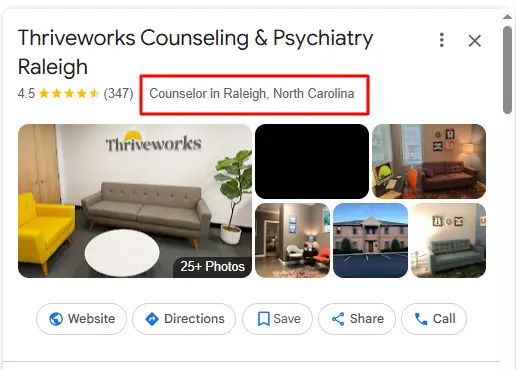
For example, a behavioral health clinic may select:
- Counselor
- Mental Health Service
- Family Counselor
- Addiction Treatment Center
- Psychologist
…without understanding how Google uses business categories.
Your primary category carries significant ranking weight.
Don’t Guess, but Research Your Competitors
One mistake I often see is businesses trying to hack Google by choosing unusual categories.
That usually backfires.
Instead:
- Search your primary keywords
- Analyze the top-ranking competitors
- Look at 10–20 profiles
- Identify the category patterns
If most successful clinics use the same primary category, there’s probably a reason.
Choose the category that best represents your core service, not simply the one that sounds appealing ( I know that sounds awkward but it works everytime)
Secondary categories should support your primary offering rather than replace it.
2. Your Services Section Is Empty (Or Poorly Optimized)
After selecting the correct category, many clinics completely ignore the Services section.
This is a missed opportunity.
Google uses this information to better understand what your clinic offers.
If You Offer Therapy Services
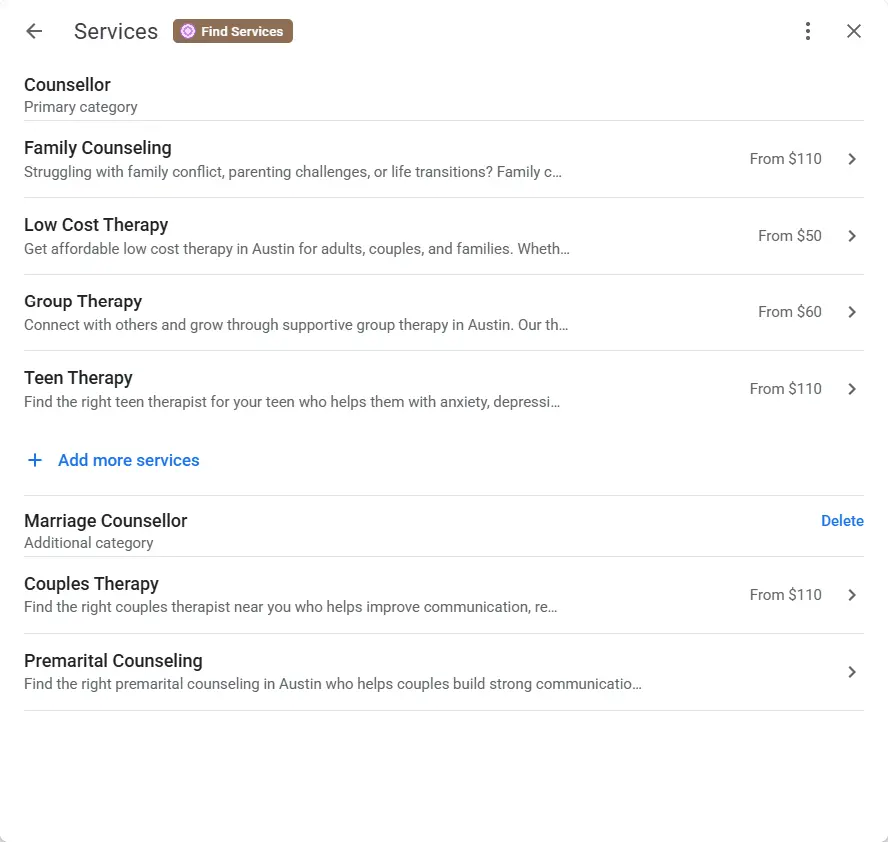
Include services like:
- Individual Therapy
- Couples Therapy
- Marriage Counseling
- Family Therapy
- Teen Therapy
- Child Therapy
- EMDR Therapy
- Trauma Therapy
- Group Therapy
If You Focus on Mental Health Conditions
Instead of listing only therapy types, include services centered around conditions such as:
- OCD Treatment
- Depression Treatment
- Anxiety Treatment
- PTSD Treatment
- Bipolar Disorder Treatment
- ADHD Evaluations
- Panic Disorder Treatment
Write these naturally using the right entities with the right keywords at the right places.
Avoid keyword stuffing.
The goal is to accurately explain your services while helping Google understand your areas of expertise.
3. Don’t Make Your Photos Look Generic
Many clinics underestimate how much photos influence both rankings and conversions.
Google wants authentic businesses.
Yet I still see profiles filled with:
- Stock images
- Low-quality graphics
- Random logos
- Outdated office photos
Patients notice this immediately.
So does Google.
Upload Real Photos That nclude:
- Reception area
- Waiting room
- Therapy rooms
- Building exterior
- Entrance
- Staff (when appropriate)
- Team events
- Community involvement
Authentic photos build trust before someone ever calls your clinic.
Create a Professional Cover Banner
If you don’t have an in-house designer, even a well-designed Canva graphic is better than an outdated image.
Your cover photo should clearly communicate:
- Your clinic name
- Professional branding
- Clean design
- High resolution
Remember, your Google Business Profile is often your first digital impression.
4. Your Business Hours Aren’t Accurate
This sounds simple, but it causes more problems than most clinics realize.
I’ve seen businesses list hours that don’t reflect reality.
Patients arrive when the clinic is closed.
They call after hours expecting someone to answer.
Eventually, frustrated patients leave negative reviews mentioning inaccurate hours.
Google pays attention to those signals.
Keep Hours Consistent Everywhere
Your hours should match across:
- Google Business Profile
- Website
- Directory listings
- Healthcare directories
Google constantly compares information from multiple sources.
Inconsistencies create confusion and reduce trust.
Whenever your hours change, even temporarily, update every platform immediately.
5. Your Name, Address & Phone Number (NAP) Aren’t Consistent
Consistency still matters. Though for the last 2-3 years, it was not that important but with AI, it is now!
Your clinic’s:
- Name
- Address
- Phone number
should appear exactly the same everywhere online.
Small differences like:
- Suite vs Ste.
- Road vs Rd.
- Different phone numbers
- Different business names
can create conflicting business signals.
Build Quality Citations
Your clinic should be listed consistently across trusted platforms, including healthcare directories, local business directories, and reputable citation websites.
While citations alone won’t guarantee higher rankings, they strengthen Google’s confidence that your business information is accurate.
6. You’re Not Publishing Google Posts
Most behavioral health clinics never touch this feature.
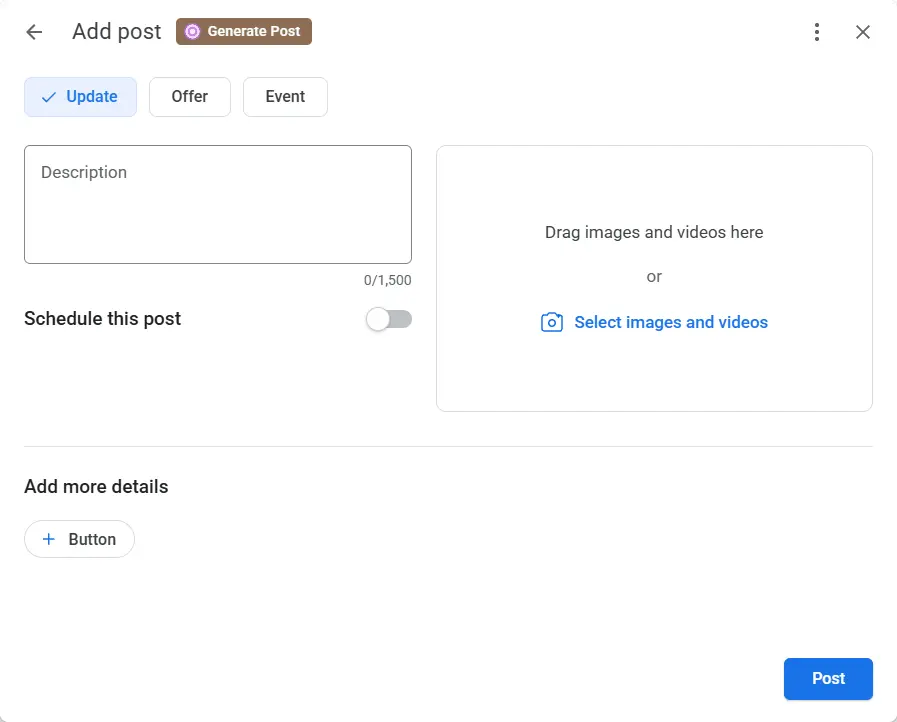
That’s a mistake.
Google Posts allow you to keep your profile active while providing useful information to prospective patients.
Share content such as:
- Mental health awareness campaigns
- Anxiety management tips
- PTSD education
- New therapist introductions
- Clinic announcements
- Community events
- Seasonal mental health advice
- New treatment programs
Fresh activity sends positive engagement signals and gives patients another reason to interact with your profile.
Also Read: Multi-Location SEO for Mental Health Clinics (How & What Actually Happens at Scale)
7. You’re Ignoring the Events Section
If your clinic hosts:
- Workshops
- Support groups
- Community education sessions
- Mental health awareness events
- Open houses
add them to your Google Business Profile.
This not only increases engagement but also demonstrates that your clinic is actively involved in the local community.
Google prefers businesses that stay active.
8. You’re Not Building Reviews Consistently
Reviews remain one of the strongest local ranking signals. They’re also one of the biggest trust factors for prospective patients.
Behavioral health presents unique challenges because asking patients for reviews requires sensitivity and ethical consideration.
Even so, many clinics can still build reviews through compliant, patient-centered processes where appropriate.
Instead of asking only occasionally, develop a consistent review strategy.
Focus on:
- Making it easy for eligible patients to leave feedback
- Responding professionally to every review
- Thanking reviewers
- Addressing concerns respectfully
- Never purchasing fake reviews
Quality always beats quantity. And authentic reviews build credibility with both Google and future patients, and also saves your profile in the long-term from suspension.
9. Your Clinic Isn’t Being Mentioned Across the Web
Google doesn’t rely only on your website and your Google Business Profile. It also looks at what other trusted websites say about your business.
These are known as third-party mentions.
Examples include:
- Local news coverage
- Community organizations
- Healthcare directories
- Professional associations
- University partnerships
- Local sponsorships
- Podcasts
- Interviews
Every legitimate mention reinforces your clinic’s credibility.
These signals help Google understand that your clinic is established within your community.
Even the reviews you have on social media platforms such as Facebook are also featured on your Google Business Profile as well.
10. Your Website Doesn’t Support Your Google Business Profile
Many people treat SEO and Google Business Profile optimization as two separate strategies.
They’re not.
Your website directly influences your Google Maps performance.
Google compares information between your website and your profile.
Your website should clearly communicate:
- Services
- Locations
- Business hours
- Contact information
- Clinician information
- Service areas
When everything aligns, Google gains greater confidence in your business.
Final Thoughts
Google Maps rankings rarely improve because of one magic fix or some random hack.
They’re the result of dozens of small trust signals working together.
The clinics that consistently appear in the Local Pack aren’t necessarily the largest organizations, they’re often the ones that maintain accurate information, stay active, earn genuine reviews, publish helpful updates, and present a trustworthy online presence.
If your behavioral health clinic isn’t ranking where it should, don’t start by blaming Google’s algorithm.
Start by auditing your Google Business Profile.
In many cases, the opportunities are hiding in plain sight.
A properly optimized Google Business Profile can become one of your clinic’s most valuable sources of qualified patient inquiries, without increasing your advertising budget.