
Imagine someone searches Google for “drug rehab near me” because they or a loved one needs addiction treatment. They compare facilities, review treatment options, and check reviews before deciding whom to contact. If your rehab center offers the right care but doesn’t appear in those search results, potential patients may never discover it.
That’s where drug rehab SEO comes in. A focused strategy helps your facility appear when people search for treatment, understand your programs, and take the next step. Working with a Rehab SEO Expert can help you build visibility around the searches that matter to your admissions pipeline.
But Google isn’t the only place people look for care. More people are using AI platforms like ChatGPT, Claude, Gemini, and Perplexity to research treatment options and find rehab recommendations. Strong Google rankings don’t guarantee visibility across these platforms, and each LLM can recommend different facilities.
To attract more qualified inquiries, rehab centers need to build visibility across traditional search and AI platforms, establish trust with prospective patients and their families, and turn that visibility into meaningful admissions opportunities.
In this guide, we’ll cover 10 practical drug rehab SEO strategies to help you do exactly that.
1. Target High-Intent Keywords That Bring Treatment-Seeking Visitors
Imagine your drug rehab center ranks for dozens of addiction-related blog topics and attracts thousands of monthly visitors. Yet, when someone searches for “inpatient drug rehab in Orange County” or “drug rehab that accepts Aetna,” your website is nowhere to be found.
That’s a keyword strategy problem. Your website may attract people researching addiction without reaching enough people actively looking for treatment.
To understand why this matters, consider the barriers people face when seeking care. According to SAMHSA’s 2025 National Survey on Drug Use and Health, 39.2% of adults with a substance use disorder who perceived an unmet need for treatment said they thought treatment would cost too much. Another 30.4% reported insufficient health insurance coverage, while 40.5% said they did not know how or where to get treatment.
These findings highlight why drug rehab websites should make treatment options, costs, insurance coverage, and access to care easy to understand. Source: SAMHSA.
Identify the keywords your potential patients and their families use
Start by organizing your keywords around the services your facility actually provides.
- Treatment-related keywords: Drug rehab, inpatient drug rehab, medical detox, and outpatient addiction treatment.
- Location-based keywords: Drug rehab in Orange County, addiction treatment in Nashville, and rehab centers near me.
- Insurance-related keywords: Drug rehab that accepts Aetna and addiction treatment covered by Blue Cross Blue Shield.
- Condition-specific keywords: Opioid addiction treatment, fentanyl addiction treatment, and prescription drug addiction treatment.
- Program-specific keywords: Residential addiction treatment, partial hospitalization programs (PHP), and intensive outpatient programs (IOP).
Don’t stop at these broad terms. Look for more specific searches that reflect what someone needs from a treatment provider. For example, someone searching for an outpatient program that accepts their insurance has different requirements from someone looking for residential treatment.
These more specific queries may have lower reported search volumes, but they can reveal useful opportunities to address particular treatment needs.
2. Build Dedicated Pages for Your Core Treatment Programs
People searching for addiction treatment often search for a specific type of care rather than a facility by name. Google’s research on treatment seekers found that more than half of search paths included treatment-related terms, while fewer than 1 in 10 involved branded searches. This makes dedicated pages for your core programs important: your facility needs to appear when people search for the care you provide.
If your center offers medical detox, residential treatment, PHP, and IOP, create a dedicated page for each program instead of covering everything on one general treatment page.
What Should Each Page Include?
Focus on the information prospective patients and their families need to evaluate your program.
- Treatment details: Explain the services offered, clinical approach, and who the program serves.
- Eligibility and duration: Describe who may benefit and what a typical schedule looks like, where applicable.
- Insurance and costs: Clearly list accepted insurance plans and explain how to verify coverage. Google’s research found that 91% of treatment seekers considered whether a center accepted their healthcare plan a top priority.
- Trust signals: Include relevant clinical credentials, staff qualifications, accreditations, and genuine patient reviews where appropriate. Only mention accreditations your facility actually holds.
- Clear next steps: Make it easy to contact admissions, ask questions, or verify insurance. Use plain language rather than relying on clinical jargon.
Remember, the goal is not to create more pages. It’s to build the right pages for the treatments your facility provides and give people enough information to take the next step.
3. Optimize Your Google Business Profile for Local Visibility
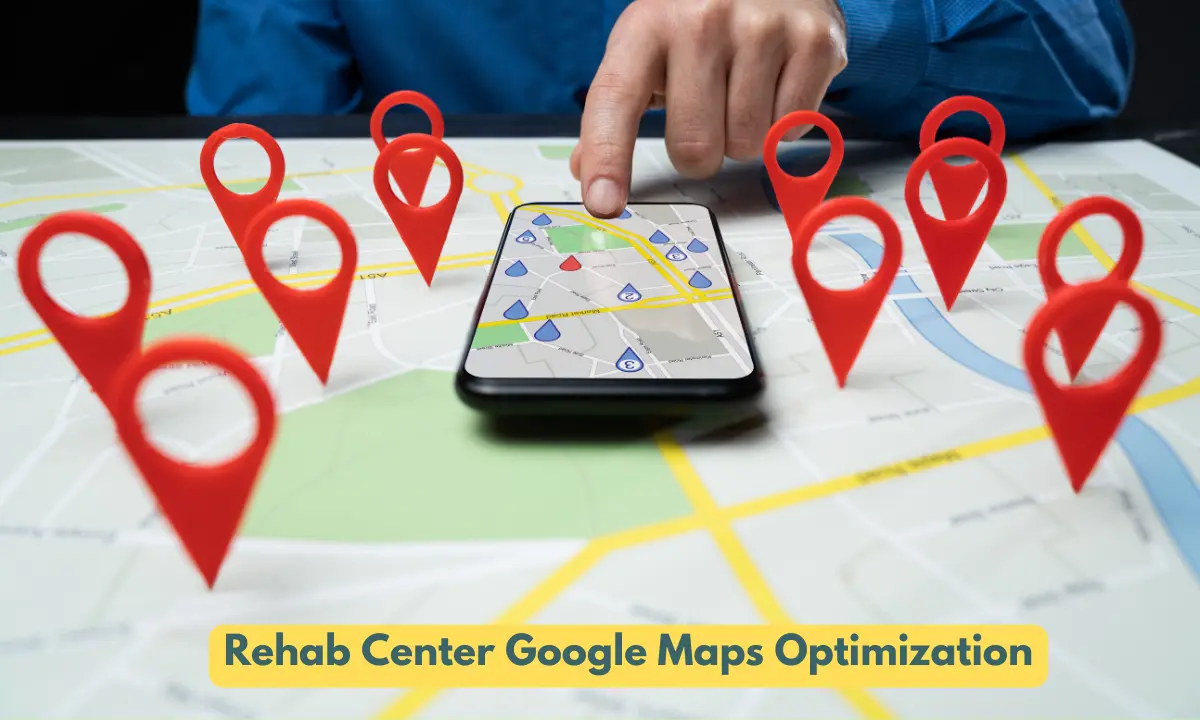
When someone searches for “drug rehab near me,” Google may show nearby treatment centers in Maps. An optimized Google Business Profile (GBP) helps your facility appear in local results and gives prospective patients key information about your services.
Whitespark’s 2026 survey ranked primary business category and proximity among the strongest factors in local Maps rankings. You can’t control distance, but you can improve your profile’s relevance and accuracy.
How to Optimize Your Profile
- Choose the right category: Select the primary category that best describes your facility. Add only relevant secondary categories.
- Keep information accurate: Verify your business name, address, phone number, website, hours, and services. Create profiles only for eligible locations, and avoid duplicates.
- Add real photos: Show your facility and treatment spaces with genuine, up-to-date images.
- Manage reviews: Encourage honest feedback without incentives or pressure. BrightLocal’s 2026 survey found that 68% of consumers expect at least a four-star rating when considering a business.
- Protect patient privacy: Never confirm someone’s patient status or disclose treatment details in review responses. In 2023, a New Jersey psychiatric provider agreed to pay $30,000 to settle an HHS case involving patient information disclosed in responses to Google reviews.
- Share useful updates: Post relevant program announcements and photos when needed. Focus on helping prospective patients rather than posting just to meet a schedule.
Link to the Right Location Page
Link each profile to its corresponding location page, not automatically to the homepage. Include accurate contact details and explain which treatment services are available at that location.
How to implement it: Audit your profiles, correct inaccurate information, review your categories, and check that each profile links to the right page. Track local visibility, calls, website visits, and qualified inquiries.
Don’t add keywords to your business name unless they’re part of its genuine real-world name. Keyword stuffing violates Google’s guidelines and can put your profile at risk of suspension.
The goal is simple: help people find your facility, understand your services, and contact admissions.
4. Create Location Pages for the Areas You Serve
People often search for treatment in a specific city, such as “drug rehab in Phoenix” or “detox center in Orange County.” Location pages help your facility target relevant local searches and explain how people in that area can access treatment.
Whitespark’s 2026 local SEO survey ranked geographic relevance among the leading local organic ranking factors. Its AI search findings also highlighted location relevance, making it worth addressing in your content.
What Should Each Location Page Include?
- Services available: Explain which treatment programs people can access and where treatment takes place.
- Accurate contact details: Match the business name, address, and phone number on the page to the corresponding Google Business Profile.
- Local relevance: Reference relevant nearby communities, transport options, or local resources. Where useful, include county-level overdose data from the CDC or your state health department, clearly labeled with its date and provisional status.
- Trust signals: Include relevant credentials, accreditations, and genuine testimonials where appropriate.
- Clear next steps: Explain how to contact admissions, verify insurance, and arrange treatment.
For residential programs, be clear if your facility is outside the city being targeted. You can explain that you serve residents of that area, but don’t imply that treatment is provided locally when it isn’t.
5. Fix Technical SEO Issues That Prevent Search Engines From Finding Your Pages
Your treatment pages can offer excellent information and still struggle in search if search engines can’t crawl, index, or understand them. Technical SEO helps keep your website accessible, fast, and reliable for prospective patients.
Focus on these areas:
- Crawlability and indexation: Use Google Search Console to identify important pages that are blocked, excluded from indexing, or returning errors.
- Site structure and internal links: Organize treatment and location pages logically, link related content, and fix broken internal links.
- Page speed and mobile usability: Check Core Web Vitals, especially Largest Contentful Paint (LCP), which measures how quickly the main content loads. The 2025 Web Almanac found that only 48% of mobile websites passed all three Core Web Vitals. Optimize large images, sliders, and other elements that slow down key pages.
- Duplicate URLs and redirects: Fix duplicate pages, incorrect canonical tags, broken links, and unnecessary redirect chains.
- Structured data: Use relevant schema, such as MedicalClinic, MedicalOrganization, or BreadcrumbList, where appropriate. Structured data helps search engines interpret your pages, but it doesn’t guarantee higher rankings or rich results.
- Website security: Use HTTPS, monitor for malware and spam injections, and keep your CMS and plugins updated.
6. Publish Content That Answers Real Treatment Questions
People researching addiction treatment often have questions about costs, insurance, withdrawal, and available programs. Google’s research on treatment seekers found that 25% of search paths included condition-related terms, showing why educational content matters alongside treatment pages.
Cost and insurance content is especially important. SAMHSA identifies financial barriers, insufficient insurance, and not knowing where to find treatment among the reasons people may go without care.
Create content that answers questions such as:
- How much does drug rehab cost?
- Does insurance cover addiction treatment?
- What is the difference between PHP and IOP?
- How long does drug detox take?
- What should families expect during treatment?
- Can addiction and mental health conditions be treated together?
Question-based content also matters for AI search. Seer Interactive’s 2026 study found that question-format queries triggered Google AI Overviews 85.9% of the time. One study also found that AI citations often draw from content near the beginning of a page, reinforcing the value of answering the main question early.
The goal is to answer real concerns, build trust, and help readers find an appropriate path to treatment.
7. Build Trust and Demonstrate Your Rehab Center’s Credibility
Choosing a drug rehab center is a significant decision. Patients and families need to know that your facility is qualified, its treatment information is reliable, and its credentials are genuine.
Build trust through these signals:
- Show clinical expertise: Publish staff biographies, qualifications, licenses, and relevant experience. Link to state license verification tools where available.
- Display verified credentials: Highlight state licenses and accreditations from organizations such as CARF or The Joint Commission, where applicable. Link to official directories so visitors can verify them.
- Get clinical content reviewed: Have treatment-related pages reviewed by qualified professionals. Display the reviewer’s name, credentials, and review date.
- Support medical claims: Cite reliable sources such as SAMHSA, NIDA, and the CDC. Explain treatment options honestly and avoid guarantees of recovery.
- Maintain a consistent reputation: Keep your facility’s name, address, phone number, and credentials accurate across your website, Google Business Profile, and relevant directories.
- Protect patient privacy: Obtain appropriate written authorization before publishing identifiable patient testimonials, stories, or images. Follow applicable HIPAA and, where relevant, 42 CFR Part 2 requirements.
8. Earn Relevant Backlinks, Brand Mentions, and Third-Party Citations
In my work with rehab centers, I’ve seen how backlink issues can affect SEO performance. Over the last three months, I’ve worked on toxic backlink issues across three websites, disavowing more than 1,000 toxic links per clinic.
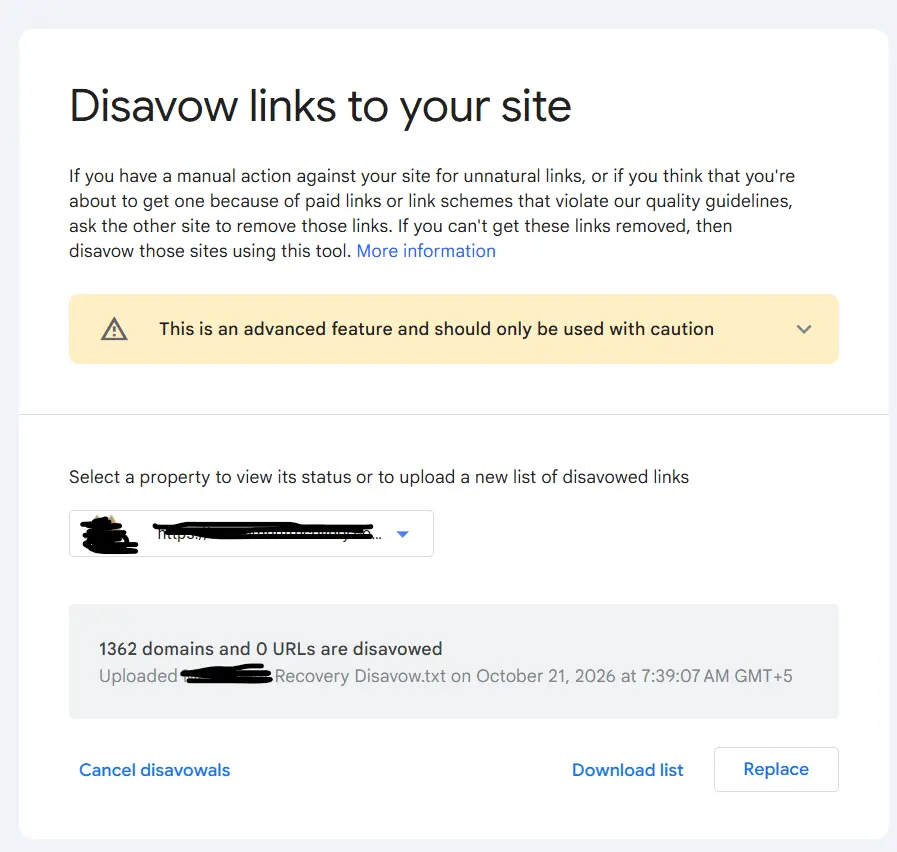
In my view that backlink quality matters more than link volume. Disavowing links isn’t always necessary, though; Google recommends it only in specific circumstances.
Backlinks aren’t the only signal worth building. Ahrefs analyzed 75,000 brands and found that linked and unlinked brand mentions correlated with visibility in Google AI Overviews (0.664 correlation). This doesn’t prove causation, but it suggests that building your rehab center’s reputation across trusted third-party sources matters alongside traditional link building.
How to Build Your Rehab Center’s Authority
- Maintain accurate listings: Check FindTreatment.gov, state licensing directories, accreditor listings, and professional associations. An HHS Office of Inspector General audit found inaccurate information for 66 of 100 sampled FindTreatment.gov facilities.
- Build genuine relationships: Connect with community health organizations, recovery networks, hospitals, and nonprofits.
- Publish useful resources: Create research-backed guides on treatment options, insurance coverage, and local access to care.
- Share clinical expertise: Contribute insights from qualified clinicians to healthcare publications, addiction-focused websites, and journalists.
- Keep business information consistent: Ensure your facility’s name, address, phone number, services, and credentials are accurate across platforms.
- Reclaim unlinked mentions: Ask publishers to link to your website when doing so would help their readers.
What to Avoid
- Buying links to manipulate rankings: Google considers links intended to manipulate rankings a violation of its link spam policies.
- Fake or misleading reviews: The FTC’s review rule prohibits specified deceptive review practices.
- Improper referral payments: EKRA and state laws may restrict certain referral arrangements. Consult healthcare counsel before entering referral or marketing agreements. See 18 U.S.C. § 220.
The goal is to earn credible links and mentions that reflect your rehab center’s actual expertise, services, and reputation, not simply increase your backlink count.
9. Optimize Your Rehab Website for Conversion
Getting your rehab center to appear in Google Search and Maps is only part of the job. Your website also needs to help prospective patients and their families take the next step.
If visitors land on your website but struggle to understand your programs, verify insurance, or contact admissions, your search visibility may not translate into qualified inquiries.
How to Improve Your Website’s Conversion Rate
- Make contact options clear: Place your admissions phone number and contact options where visitors can find them easily, especially on mobile.
- Simplify insurance verification: Explain how visitors can check their coverage and what information they need to get started.
- Clarify your treatment programs: Help visitors understand the differences between detox, residential treatment, PHP, and IOP, where offered.
- Reduce friction in forms: Request only the information needed to respond to an inquiry, and make forms easy to complete on mobile.
- Build trust near conversion points: Display relevant credentials, clinical qualifications, accepted insurance information, and clear explanations of your admissions process.
- Track meaningful conversions: Measure calls, form submissions, insurance verification requests, and qualified inquiries. Where possible, connect these metrics to admissions outcomes while protecting patient privacy.
Review these metrics alongside organic traffic and landing-page performance. If a page attracts relevant visitors but generates few inquiries, investigate whether unclear information, poor usability, or a difficult contact process is creating barriers.
The goal is to turn the search visibility you earn into a clear, accessible path toward treatment.
10. Optimize Your Rehab Center for AI Search (GEO)
AI platforms are becoming another way people research addiction treatment. A March 2026 KFF poll found that 32% of US adults had used AI chatbots for health information in the past year, including 16% for mental health information.
For rehab centers, this creates another opportunity to reach people researching treatment. But ranking well on Google doesn’t guarantee your facility will appear in AI recommendations.
How to Improve Your Rehab Center’s AI Visibility
- Answer treatment questions directly. Publish accurate information about your programs, insurance, levels of care, costs, and admissions process.
- Follow SEO fundamentals. Google says pages must be indexed and eligible to appear with snippets to be considered for its AI search features. No special AI markup is required.
- Keep facility information consistent. Ensure your website, Google Business Profile, directories, and accreditor listings accurately reflect your services, locations, and credentials.
- Earn credible brand mentions. Build recognition through reputable healthcare publications, professional organizations, and relevant treatment directories.
- Make content clear and trustworthy. Use descriptive headings, direct answers, qualified clinical reviewers, and reliable medical sources.
- Use structured data appropriately. Ensure schema matches the visible page content. Google does not require special schema for AI Overviews or AI Mode.
Different LLMs Can Recommend Different Rehab Centers
In a LinkedIn post, I compared results for “drug rehab near me Orange County” on ChatGPT and Claude. They returned to different rehab centers, and the review counts of the recommended facilities also varied.
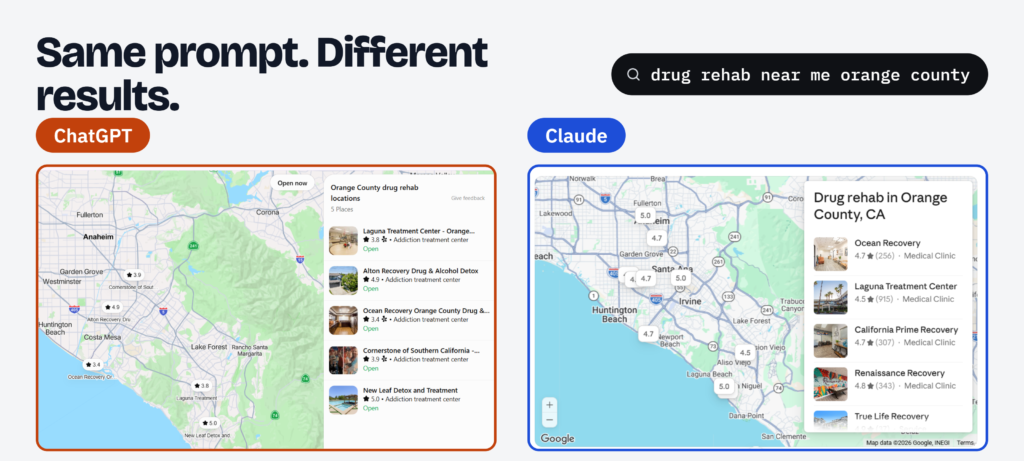
This reflects a broader challenge. Research from BrightEdge and Wellows has found substantial differences in the sources cited across AI search platforms. Ahrefs has also reported that traditional Google rankings are less predictive of citations in several AI assistants than they are of citations in Google’s own AI Overviews.
These findings come from third-party studies, and results vary by methodology. However, they reinforce an important point: there is no single AI SEO strategy that guarantees visibility across every LLM.
AI visibility doesn’t guarantee clicks or admissions. Pew Research found that Google users were less likely to click traditional search results when an AI summary appeared. This makes accurate facility information and a clear reason to choose your center especially important.
The goal is to make your rehab center a credible, relevant option across traditional search and AI platforms, helping more people discover the treatment services you provide.
Final Thoughts: Turn Drug Rehab SEO Into Qualified Admissions
Drug rehab SEO is about more than ranking on Google. It’s about helping people find your treatment center when they need care, giving them the information to make an informed decision, and making it easier for them to contact your admissions team.
From targeting high-intent keywords and optimizing your Google Business Profile to building credible content and improving visibility across AI platforms, each strategy plays a role in strengthening your online presence. The key is to focus on the services you actually provide, the locations you serve, and the questions prospective patients and their families need answered.
SEO takes consistent work, and results won’t happen overnight. Monitor your rankings, organic traffic, qualified inquiries, and admissions to understand what’s working and where your strategy needs improvement.
If your rehab center is attracting traffic but not enough relevant inquiries, or struggling to appear when people search for treatment, it may be time to reassess your approach. As a Rehab SEO Expert, I help addiction treatment and mental health centers improve their visibility across Google Search, Google Maps, and AI search so they can reach more relevant audiences and build a stronger admissions pipeline.
Ready to improve your rehab center’s search visibility? Explore my SEO services and let’s identify opportunities to help your center get found by the people looking for the care you provide.