
Anchored Recovery Community is an addiction recovery center located in San Juan Capistrano, California
Over a three-month SEO engagement, the focus was to strengthen the website’s technical foundation, improve internal linking and site architecture, optimize important service and location pages, expand content coverage, and strengthen local search visibility.
The objective was not simply to generate more rankings.
It was to build a stronger search acquisition channel that could help more people discover Anchored Recovery, visit the website, and take meaningful actions.
The Results at a Glance
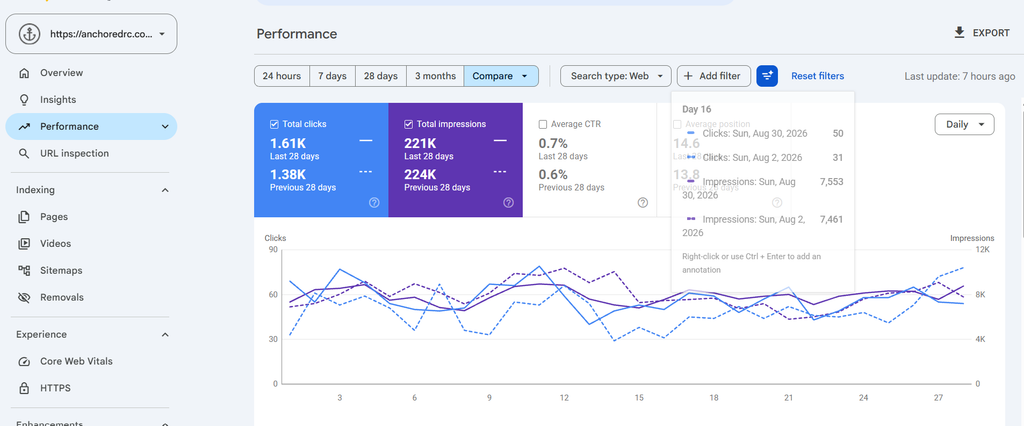
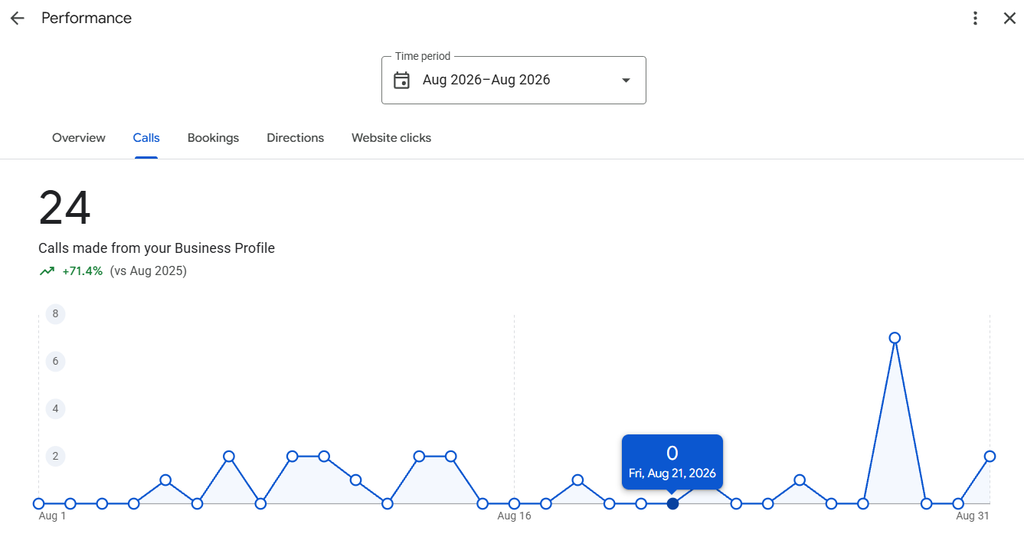

| Metric | Result |
|---|---|
| Calls | +71% |
| Website clicks | +42% |
| Google Search clicks | 1.38K → 1.61K |
| Google Search click growth | +16.7% |
| Redirected internal links addressed | 265+ |
| Orphan pages audited | 120 |
| High-value orphan pages internally linked | 20+ |
| Slow pages identified and addressed | 149 |
| Missing H1s addressed | 79 pages |
| Missing ALT-text issues reduced | 311 → 78 initially, with further optimization |
| Redirect-link cleanup | 1,173 links across 274 pages initially identified |
| New/updated content | Multiple high-value addiction and treatment topics |
The Challenge
When the engagement began, the website had strong opportunities for growth, but its technical foundation and content architecture were limiting its potential.
The initial audit uncovered:
- A server error affecting an important page
- Redirect chains
- Canonical issues
- Sitemap hygiene problems
- 18 internal links pointing from HTTPS pages to HTTP URLs
- 1,173 internal links pointing to redirected URLs across 274 pages
- 120 orphan pages
- Missing and over-length title tags
- Missing and poorly optimized meta descriptions
- Pages without H1 tags
- Hundreds of missing image ALT attributes
- Slow-loading pages
- Opportunities to improve structured data
- Content gaps around important addiction and recovery topics
- Google Business Profile optimization opportunities
The strategy was therefore built in stages, starting with the technical foundation and then moving into content, internal linking, on-page SEO, and local search.
Phase 1: Fixing the Technical Foundation
The first month focused heavily on technical SEO and site architecture.
Critical technical problems were identified, prioritized, and addressed before expanding the content strategy.
Key improvements included:
Technical errors
A previously reported 502 server error was resolved and the affected URL was verified as returning a successful 200 status.
Redirect and canonical issues were also reviewed and corrected where actionable.
Sitemap cleanup
The XML sitemap was reviewed for 3XX, 5XX, and noindex URLs, with unnecessary issues removed or evaluated against the site’s intended configuration.
HTTPS cleanup
18 internal links were identified as pointing from HTTPS pages to HTTP versions and were corrected.
Redirect cleanup
The audit initially identified 1,173 links across 274 pages pointing to redirected URLs.
Rather than treating every link equally, the work was prioritized based on page value and organic traffic.
The first batch focused on the highest-value pages, followed by additional cleanup.
More than 265 redirected links were subsequently addressed on important pages.
Orphan-page recovery
The website had 120 orphan pages that lacked meaningful internal links.
These pages were reviewed and prioritized according to organic traffic and business value.
The highest-value pages were then connected back into the site’s internal linking structure.
Phase 2: Strengthening On-Page SEO
Once the technical foundation was improved, the next focus was making important pages clearer and more competitive in organic search.
The work included:
- Optimizing title tags
- Rewriting missing meta descriptions
- Fixing over-length meta descriptions
- Improving SERP title alignment
- Adding missing H1 tags
- Optimizing image ALT text
- Improving the homepage
- Reworking important treatment pages
- Improving service and location content
Title & Metadata Optimization
A significant number of pages had title and metadata issues.
The campaign addressed:
- 175+ over-length title tags
- 32 pages where Google was rewriting the SERP title
- 15 missing meta descriptions
- 49 meta descriptions requiring length and optimization improvements
The objective was to make the site’s search snippets more relevant, descriptive, and aligned with search intent.
Phase 3: Improving Site Architecture Through Internal Linking
Internal linking became one of the largest areas of opportunity discovered during the campaign.
Instead of adding links randomly, pages were evaluated based on:
- Organic traffic
- Business value
- Search intent
- Topical relevance
- Existing authority
- Commercial importance
The initial audit identified 245 internal linking opportunities for a high-value treatment-related page.
Other internal linking work focused on:
- Orphan pages
- Treatment pages
- Alcohol-related content
- Sober living content
- PHP content
- IOP content
- Supporting blog posts
This created stronger connections between informational content and the treatment pages that matter most to the business.
Phase 4: Expanding Content Around Addiction & Recovery
The strategy then moved beyond technical cleanup into search demand expansion.
Rather than publishing content simply to increase the number of pages on the site, topics were selected based on search demand, relevance, difficulty, and their ability to support the broader treatment-content ecosystem.
New and updated content included topics such as:
What Does Meth Look Like?
A new article targeting a high-volume informational search opportunity, with approximately 12,000 monthly searches and relatively low keyword difficulty.
Alcohol Addiction Content
Additional content was created around questions such as:
- Can You Be Addicted to Alcohol Without Drinking Every Day?
- Why Do I Shake When I Drink Alcohol?
These articles helped expand the site’s coverage of alcohol-related addiction searches.
Treatment Content
Important treatment pages were also rewritten or expanded, including:
- IOP
- Virtual IOP
- PHP
- Sober living
A dedicated Virtual IOP page was also launched to better target this service and its associated search intent.
Phase 5: Local SEO & Structured Data
Because addiction treatment is highly location-dependent, local search was another important part of the strategy.
The Google Business Profile was reviewed and optimized, including its service information and location relevance.
The website’s entity signals were also strengthened through structured data.
Schema improvements included:
- LocalBusiness schema
- MedicalOrganization schema
- NAP information
- Geographic information
- Business information
This helped create stronger connections between the organization, its services, locations, and website.
Phase 6: Page Experience & Performance
Technical SEO was not limited to crawlability.
Page performance was also addressed.
The audit identified 149 slow pages, which were prioritized and worked through using improvements such as:
- Image optimization
- Image compression
- Lazy loading
- Performance improvements
- Page-level optimization
This helped improve the overall technical quality of the site and provided a better foundation for both users and search engines.
The Results
| KPI | Result |
|---|---|
| Calls | ↑ 71% |
| Website Clicks | ↑ 42% |
| Organic Search Clicks | 1.38K → 1.61K (+16.7%) |